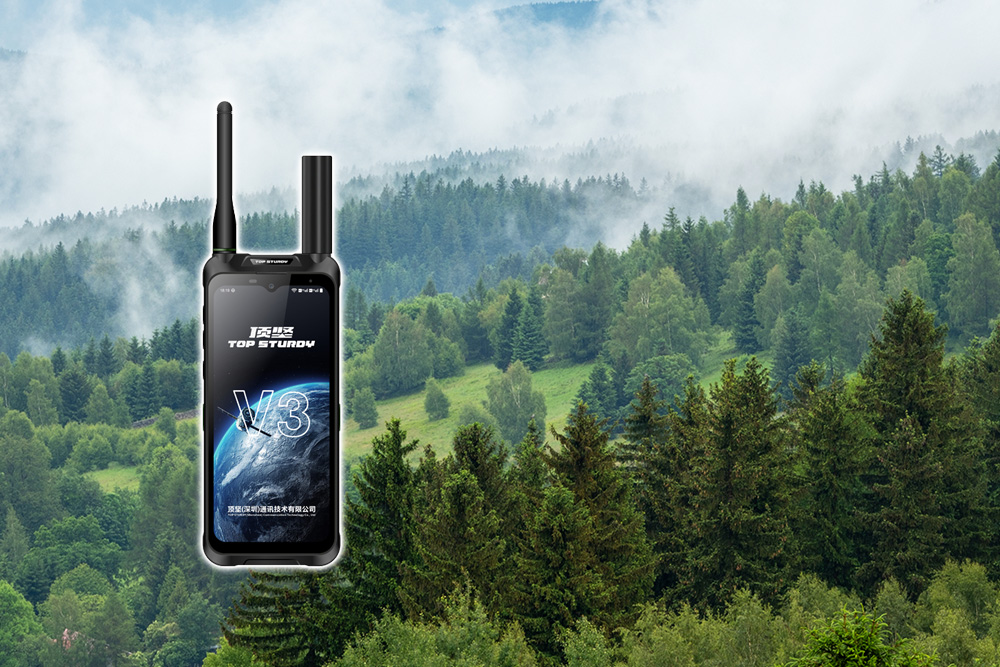
In extreme disaster scenarios, ground communication networks are often the first to be destroyed, causing disaster areas to become "information islands." Dingjian multi-mode Tiantong satellite phone integrates the three core technologies of Beidou short message, high-precision positioning and Tiantong satellite communication to build an integrated emergency system of "communication-positioning-rescue", becoming the "life link" between people in disaster areas and rescue forces. The following is an analysis of how to realize the protection of silent calls for help from the three major functional modules.:
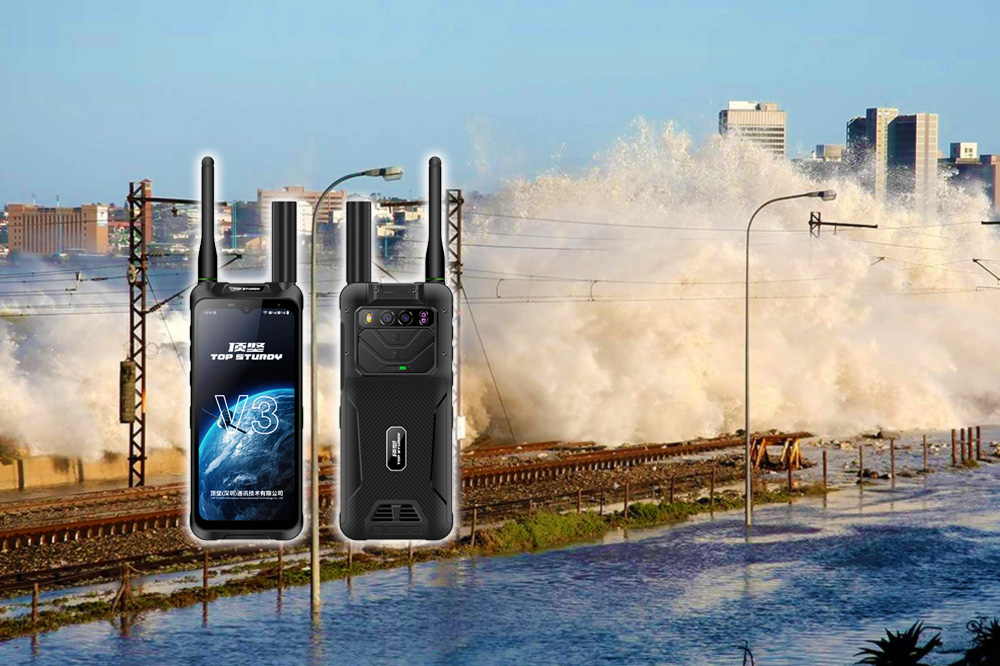
1. Beidou short message: "Two-way life channel in an environment without public network"”
Functional principle
Beidou short message is a unique function of the Beidou satellite navigation system, which allows users to send and receive short text messages through satellites without relying on ground base stations. Dingjian equipment deeply integrates Beidou short messages and Tiantong satellite phones to realize "voice + SMS" dual-channel emergency communication.
Disaster area application scenarios
Silent cry for help: In disasters such as earthquakes and floods, victims may be unable to call for help due to injuries, physical exhaustion, or environmental dangers. Through the Beidou short message function of the satellite phone, "SOS + location coordinates" can be silently sent to the rescue platform to avoid secondary damage caused by exposing the location.
Disaster reporting: Grassroots rescuers use short messages to upload key information such as the disaster area, casualties, and road damage to provide decision-making basis for the rear headquarters.
Family contact: When the Internet is disconnected for a long time, people in disaster areas can send "safe" messages to their families through short messages to relieve anxiety.
Technical advantages
Highly resilient to disasters: The Beidou satellite orbits at an altitude of 20,000 kilometers and covers a wide range. It can still work stably even in extreme disaster areas around the world (such as polar regions and deserts).
Low power consumption design: The energy consumption of short message transmission is only 1/10 of that of satellite voice calls, which extends the battery life of the device and is suitable for long-term emergency use.
2. High-precision positioning: From "finding a needle in a haystack" to "precision rescue"”
Four-mode positioning system
Dingjian equipment integrates a single Beidou + RTK high-precision positioning module, and significantly improves positioning accuracy and reliability through multi-system collaborative work. In complex terrains in disaster areas (such as mountains, forests, urban ruins), even if the signal of a single system is blocked, other systems can still provide positioning support.
Core functions
Meter-level positioning accuracy: In an open environment, the positioning error can be controlled within 1-3 meters, helping the rescue team quickly locate the trapped personnel.
Tracking: The device can record the user's movement trajectory and upload it to the cloud via satellite after the network is disconnected. This function is particularly important in outdoor exploration, geological exploration and other scenarios to prevent people from getting lost.
electronic fence: The rescue headquarters can set up electronic fences in safe areas. When victims or rescuers deviate from the safe area, the equipment automatically triggers an alarm and sends location information.
technological breakthrough
Satellite assisted positioning: The ground base station assists in calculating satellite signal parameters, shortening the time to first fix (TTFF) from 30 seconds of traditional GPS to less than 5 seconds, gaining valuable time for emergency calls.
Anti-interference design: It adopts military-grade anti-interference algorithm to effectively filter electromagnetic interference in disaster areas and ensure stable positioning signals.
3. Tiantong Satellite Communications: "The radio wave that never disappears" in the disaster area”
Advantages of Tiantong-1 Satellite System
Tiantong-1 is a mobile communication satellite system independently developed by China. It covers Chinese territory and surrounding sea areas and supports voice, text message, and data transmission. Compared with overseas satellite phones, the Tiantong system has the advantages of low tariff, no language barrier, and fast service response, making it more suitable for domestic disaster emergency scenarios.
Core functions
Satellite + ground dual-mode communication: By default, the device gives priority to connecting to terrestrial 5G/4G networks, and automatically switches to satellite mode when the terrestrial base station is damaged to achieve "seamless communication".
AI intelligent noise reduction: Deep learning algorithms are used to filter environmental interference such as wind, rain, and mechanical noise to ensure clear calls in noisy environments.
One-click SOS for help: Press and hold a specific button for 3 seconds, and the device will automatically send a distress signal containing the user's location and identity information to the rescue platform, and start continuous positioning tracking until the rescue is successful.
4. Synergy of three major functions: Constructing the “iron triangle” of emergency communications in disaster areas”
Communication-positioning-help closed loop
When people in disaster areas are in danger, they can achieve efficient self-rescue through the following steps::
Step 1: Use Beidou short message to send "SOS+location coordinates" to the rescue platform ;
Step 2: The rescue platform confirms the trapped location through high-precision positioning and plans the rescue route. ;
Step 3: The rescue team maintains voice contact with the trapped persons through Tiantong satellite phone and instructs them to rescue themselves or wait for rescue.
Dingjian multi-mode Tiantong satellite phone integrates the three core technologies of Beidou short message, high-precision positioning and Tiantong satellite communication, breaking the dilemma of "communication island" in disaster areas and realizing the transformation from "passive waiting for rescue" to "active and precise request for help". In today's era of frequent natural disasters, this equipment is not only the "guardian of life" for people in disaster areas, but also a landmark achievement of the modernization of China's emergency management system.