Dingjian uses its wireless temperature and vibration sensors to achieve early warning of mechanical equipment failures at industrial sites. It mainly relies on the sensor's high-precision monitoring, real-time data transmission, intelligent analysis algorithms and multi-level early warning mechanisms. The following is the specific implementation method and analysis.:
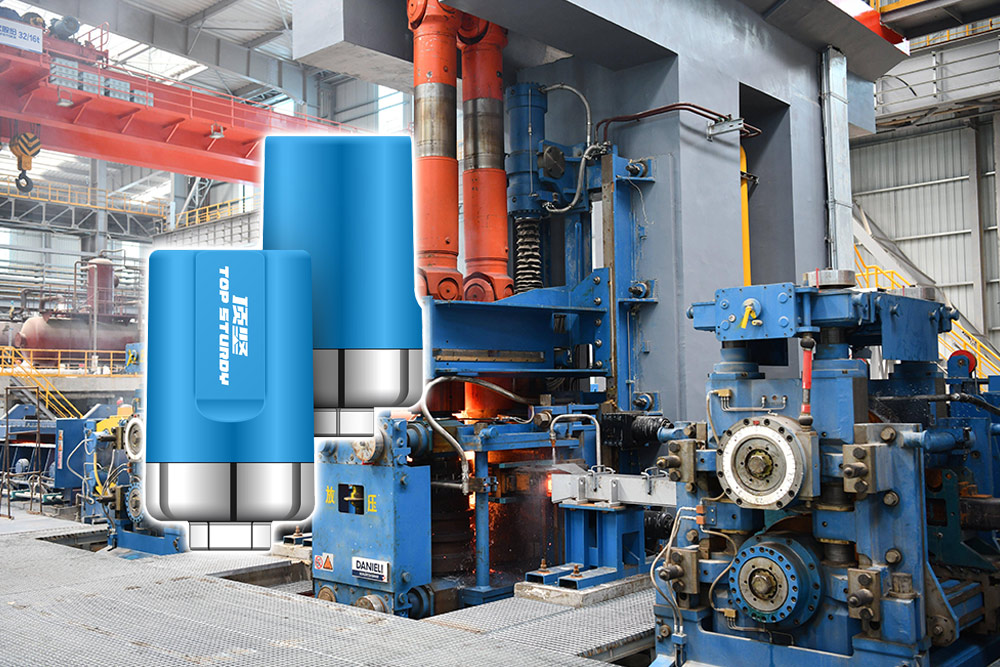
1. High-precision monitoring: "Sensory system that captures device anomalies"”
The wireless temperature and vibration sensor integrates temperature and vibration monitoring functions, and simultaneously collects equipment vibration speed, acceleration, displacement and surface temperature data through the built-in MEMS chip, and supports X/Y/Z three-axis vibration direction measurement. This multi-parameter monitoring capability enables it to accurately capture subtle abnormalities in equipment operation.:
Vibration monitoring: By analyzing time domain characteristic values such as vibration frequency, amplitude, and kurtosis coefficient, as well as bearing fault characteristic frequency point energy in the frequency spectrum, mechanical faults such as bearing wear, gear damage, imbalance, and looseness can be identified. For example, bearing wear can cause a significant increase in vibration energy at a specific frequency, and sensors can capture this signal in advance.
temperature monitoring: Equipment overheating is a precursor to failure. The sensor can monitor the motor surface temperature in real time, with a temperature display resolution of 0.1°C and a temperature measurement accuracy of ±0.5°C, which can accurately identify overheating risks.
2. Real-time data transmission: The "neural network" that breaks down information silos”
The sensor transmits data to the cloud platform or local management system through wireless communication methods such as LoRa and 485 to achieve remote monitoring and real-time analysis.:
Low power consumption design: The sensor uses a low-power chip and optimized communication protocol to ensure long-term stable operation under battery power or CT induction power-taking mode, reducing maintenance costs.
Anti-interference ability: In view of the strong electromagnetic interference in industrial sites, the sensor adopts a special equipotential circuit design, which can still work reliably in a strong electromagnetic environment and ensure the stability of data transmission.
Flexible networking: Supports multi-device networking. One host can be used with multiple monitoring sites to achieve comprehensive coverage of large equipment or complex systems and reduce monitoring costs.
3. Intelligent analysis algorithm: The “intelligent brain” that predicts failures”
The sensor is built-in or connected to the intelligent analysis algorithm of the cloud platform to conduct in-depth mining of monitoring data.:
trend analysis: Generate temperature change curves, vibration spectrum diagrams, etc. by recording historical data to identify equipment performance degradation trends. For example, if vibration energy gradually increases over time, it may indicate increased bearing wear.
pattern recognition: Based on the equipment's historical fault data, the model is trained to identify fault modes (such as bearing faults, gear faults, etc.) and improve the accuracy of early warnings. For example, by analyzing the energy of characteristic frequency points in the vibration spectrum, the location of bearing faults can be accurately located.
Multi-level warning: Users can customize early warning and alarm thresholds for vibration speed, vibration acceleration, temperature and other parameters to achieve multi-level early warning (such as yellow warning, red alarm). When the data exceeds the limit, the system immediately notifies the management personnel through SMS, email, alarm lights, etc.
4. Multi-level early warning mechanism: Quick Response "Action Guide"”
The sensor supports multi-level early warning and rapid response mechanisms to ensure that faults are handled in a timely manner:
Real-time warning: When the monitoring data exceeds the threshold, the system immediately sends an early warning signal to remind the operator to take measures (such as shutting down for inspection, adjusting operating parameters, etc.).
Troubleshooting: Combining vibration and temperature data, the system can initially determine the type of fault (such as bearing wear, motor overheating, etc.) and provide directions for maintenance.
Remote management: Through the cloud platform or mobile APP, managers can remotely view equipment status, receive warning information, and generate analysis reports to achieve intelligent and efficient equipment management.
5. Application scenarios and value
Wireless temperature and vibration sensors are widely used in industrial manufacturing, energy, construction engineering and other fields to provide technical support for equipment predictive maintenance, energy consumption optimization and safety management.:
Industrial manufacturing: In rotating equipment such as motors, fans, and pumps, sensors can detect bearing wear, imbalance and other faults in advance to avoid sudden shutdowns and reduce maintenance costs.
Energy field: In wind power generation and solar power generation equipment, sensors can monitor the operating status of the equipment and improve power generation efficiency. ; In power transmission and distribution systems, it can improve grid reliability and security.
construction project: In the monitoring of bridges and building structures, sensors can evaluate structural stability, detect deformations, cracks and other problems in a timely manner to avoid safety hazards.
6. Unique advantages of Dingjian sensors
Dingjian’s wireless temperature and vibration sensors have significant advantages in performance, functions and application scenarios:
High protection level: IP68+IP69K protection level, it can work stably in -40℃~130℃ environment and adapt to harsh industrial environments.
Aluminum alloy shell: Excellent mechanical properties, corrosion resistance and heat dissipation ensure long-term stable operation of the sensor ; Good electromagnetic shielding performance to resist external interference.
Flexible installation: Supports magnetic and threaded installation methods, adapts to the needs of different equipment and scenarios, and is easy to install.
Smart upgrade: Supports remote upgrades, continuously optimizes algorithms and functions, and adapts to the needs of industrial intelligent development.
Dingjian wireless temperature and vibration sensors rely on their accurate monitoring, real-time transmission, intelligent analysis and multi-level early warning capabilities to build a protective barrier that "predicts the future" for industrial equipment, helping enterprises to transform from passive maintenance to active prevention. While improving production efficiency and reducing operation and maintenance costs, it injects strong impetus into industrial intelligence and safe production.
Dingjian focuses on the R&D, production and sales of three-proof communication products such as single Beidou handheld terminals, Beidou short message terminals, RTK high-precision positioning terminals, single Beidou explosion-proof intercom terminals, explosion-proof mobile phones, anti-confidential mobile phones, 5G single Beidou law enforcement recorders, satellite communication phones, etc. It supports customized domestic Kirin systems, secondary development, and provides one-stop communication equipment application solutions.