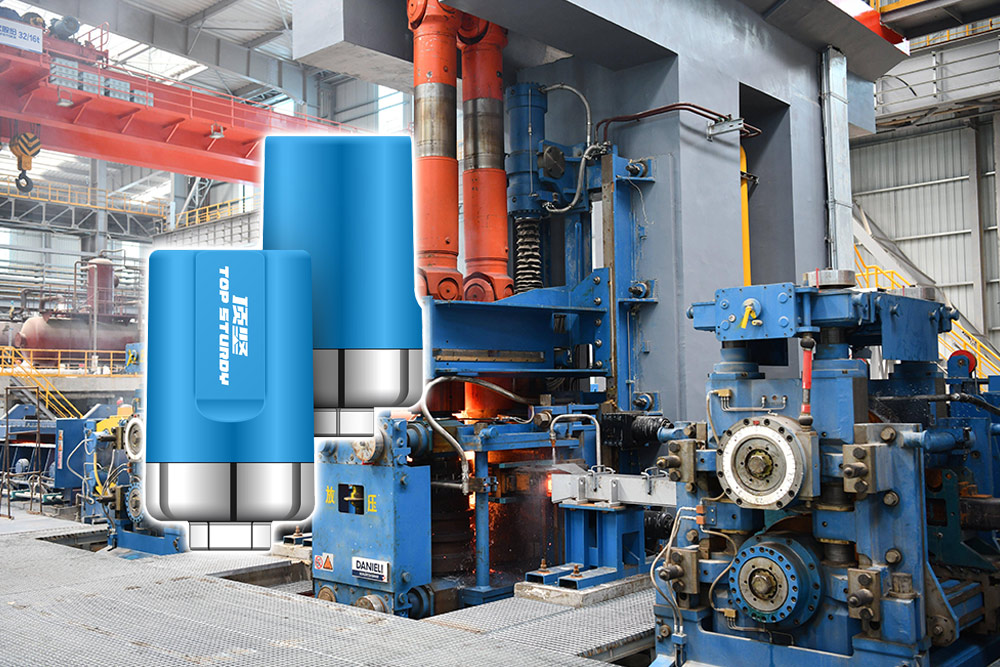
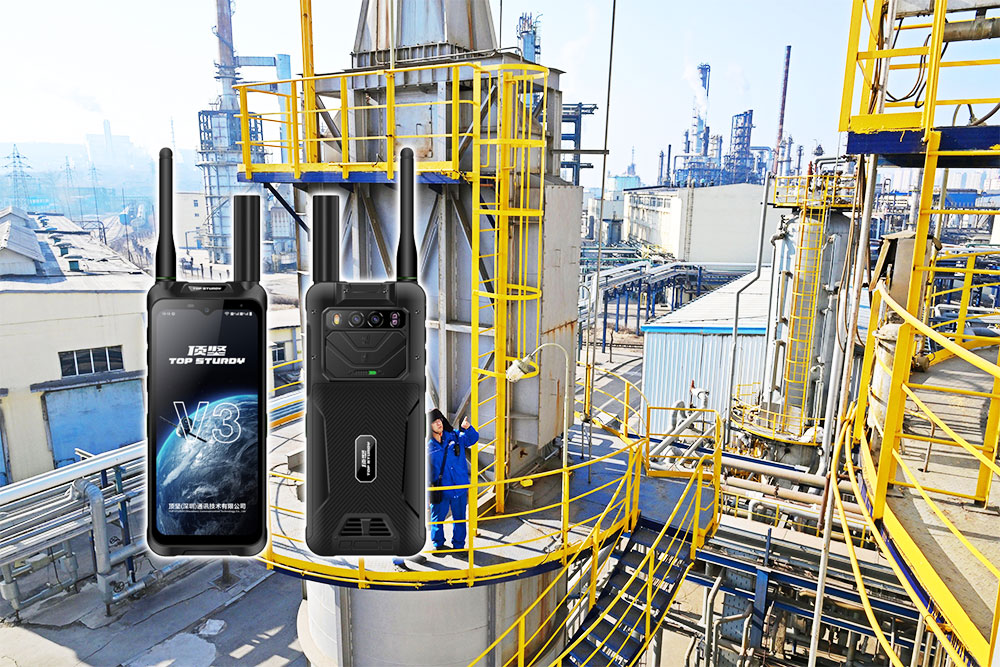
As a benchmark for multi-scenario explosion-proof communications, Dingjian Satellite Phone's unified deployment strategy in the three high-risk industrial fields of refining, electric power, and steel needs to combine industry characteristics, technical adaptability, and safety regulations to form a cross-scenario standardized solution. The following is an analysis from three aspects: technology adaptation, deployment logic, and management collaboration.:
1. Technical adaptation: The common needs of the three major industries and the core advantages of Dingjian satellite phones
The refining, chemical, electric power, and steel industries all have common risks such as flammability and explosion, high temperature and humidity, strong electromagnetic interference, and complex operating environments. They have extremely high requirements on the explosion-proof level, environmental tolerance, and communication stability of communication equipment. Dingjian satellite phone achieves cross-scenario adaptation through the following technical features:
Full coverage of explosion-proof certification: It complies with international explosion-proof standards such as ATEX and IECEx, and meets the intrinsic safety requirements of oil and gas storage tank areas in refineries, substations/transmission lines in the power industry, and converters/rolling workshops in steel plants.
Extreme environmental resistance: High temperature resistance (such as -40℃~8 0℃ working temperature), dustproof and waterproof (IP68), anti-electromagnetic interference (EMC), adaptable to high-temperature oil and gas environments in refineries, strong electric field interference in the power industry, and dust/high-temperature radiation scenarios in steel plants.
Satellite communications redundancy: Supports Beidou short message, Tiantong satellite, Iridium and other multi-mode communications to ensure that critical communications can still be maintained through satellite links when ground networks (such as 5G/4G) are interrupted (such as refinery plant explosions, power line failures, steel plant equipment failures).
Long battery life and rapid deployment: Large-capacity battery (such as 7000mAh or above) + fast charging, supports individual soldier carrying or vehicle/fixed installation, and is suitable for mobile scenarios such as refining and chemical inspections, power repairs, and steel plant equipment monitoring.
2. Unified deployment strategy: Combination of standardization and differentiation across scenarios
The unified deployment of Dingjian satellite phones must follow "standard modularization + scene customization”principles to achieve unification of equipment selection, network architecture, and management platforms in the three major industries while adapting to the special needs of each industry.:
Equipment selection standardization: Unify the use of explosion-proof levels (such as Ex d IIB T4 Gb), communication protocols (such as Beidou/Tiantong dual-mode), and interface specifications (such as explosion-proof USB/Bluetooth) to reduce cross-industry procurement and maintenance costs.
Network architecture layered design:
core layer: Deploy satellite ground stations (such as Tiantong ground stations) and explosion-proof base stations to cover the central control room of the refinery, the power dispatch center, and the general control room of the steel plant to form a backbone communication network.
access layer: Deploy explosion-proof satellite phone terminals in the storage tank area, power substation, and steel plant blast furnace area of the refinery, and interconnect with explosion-proof walkie-talkies, explosion-proof mobile phones and other equipment through Wi-Fi/Bluetooth to build a regional communication subnet.
edge layer: Inspection vehicles and mobile emergency repair vehicles are equipped with on-board satellite phones to support real-time communication and data backhaul in mobile scenarios.
Differentiated adaptation of scenes:
Refining and chemical industry: It is mainly deployed in oil and gas storage tank areas, along pipelines, and loading and unloading areas. Additional consideration must be given to anti-static design (such as conductive shells) and anti-oil and gas corrosion (such as special coatings).
Electric power industry: Focusing on substations, transmission lines, and distribution rooms, it is necessary to strengthen the ability to resist electromagnetic interference (such as shielding design) and withstand high-voltage arc shock (such as arc-proof casing).
steel industry: Covering blast furnaces, converters, steel rolling workshops, and storage areas, they need to withstand high temperatures (such as heat-insulated shells), dust-proof (such as sealed design), and mechanical impact resistance (such as reinforced structures).
3. Management collaboration: Unified operation, maintenance and emergency response across industries
The unified deployment of Dingjian satellite phones needs to be supported by a cross-industry unified operation and maintenance platform and emergency response mechanism to achieve efficient resource utilization and rapid risk disposal.:
Unified operation and maintenance platform: It integrates equipment management, network monitoring, fault alarm, data analysis and other functions to support real-time monitoring, remote diagnosis and maintenance of equipment status in the three major industries of refining, electric power and steel.
emergency response mechanism:
Daily inspection: Through the positioning function of satellite phones, real-time trajectory tracking and task scheduling of inspection personnel can be realized to ensure the standardization of pipeline inspections in refinery plants, power line inspections, and steel plant equipment inspections.
emergency communications: In emergencies (such as refinery leaks, power line failures, steel plant equipment accidents), the group call and short message functions of satellite phones can be used to quickly establish an emergency command network and coordinate cross-industry rescue resources (such as firefighting, medical, and engineering repairs).
Data sharing: Establish a cross-industry data sharing platform to realize the interoperability of oil and gas leakage monitoring data from refineries, power grid load data from the power industry, and equipment operation data from steel plants to provide comprehensive information support for emergency decision-making.
Through the three major strategies of technology adaptation, deployment standardization, and management collaboration, Dingjian Satellite Phone has achieved unified deployment across scenarios in the three major industries of refining, electricity, and steel, becoming the benchmark for multi-scenario explosion-proof communications and providing efficient, reliable, and intelligent solutions for industrial safety communications.
Dingjian focuses on the R&D, production and sales of three-proof communication products such as single Beidou handheld terminals, Beidou short message terminals, RTK high-precision positioning terminals, single Beidou explosion-proof intercom terminals, explosion-proof mobile phones, anti-confidential mobile phones, 5G single Beidou law enforcement recorders, satellite communication phones, etc. It supports customized Hongmeng systems, secondary development, and provides one-stop communication equipment application solutions.