The newly released flagship mobile phone Mate50 series is the first mass smartphone in the industry to support Beidou satellite messages. When you are in an uninhabited desert, in distress at sea, or in an environment without ground network signal coverage such as earthquake rescue, you can send text and location information to the outside world through the Changlian App to keep in touch with the outside world. It also supports the generation of trajectory maps at multiple locations. Beidou short message is a characteristic function of the Beidou navigation and positioning system. Short message communication is one of the unique services of the Beidou system that distinguishes it from other global satellite navigation systems.
To put it simply, Beidou short message can actually be regarded as the "short message" that people usually use today. The maximum length of a single communication reaches 1,000 Chinese characters. It can realize mass mobile phone satellite-ground integrated communication in areas that cannot be covered by mobile communications and the Internet without changing cards, numbers, or adding peripherals. It can both locate and display the location of the publisher. Beidou's two-way communication function means that Beidou ground terminals, Beidou satellites, and Beidou ground monitoring stations can directly transmit two-way information through satellite signals. Communication uses short messages (similar to mobile phone text messages) as the basic unit of transmission. It is a functional feature of the Beidou satellite navigation system. GPS is only one-way, so this is the advantage of Beidou. In addition, in places such as oceans, deserts and wild areas where there is no communication and network, users who install Beidou system terminals can locate their own location and publish text information to the outside world.

1. The emergence of Beidou short message communication function
The first generation of Beidou satellites was limited by the funding and technology levels at the time, and was mainly intended to solve the problem of "starting from scratch" in China's satellite positioning. User machines on the ground need to send requests to Beidou first-generation satellites in order to receive positioning information. This mechanism is called active positioning. This is different from the GPS positioning mechanism. GPS is passive positioning. The user machine on the ground only needs to receive and then parse the coordinates without sending a request to the satellite.
But precisely because of this active positioning mechanism, the first generation of Beidou satellites has the function of satellite communication, so we can use Beidou short message, a high-quality and low-cost satellite communication. Moreover, although the positioning accuracy of the active positioning mechanism is only within 100 meters, the positioning speed is very fast, and it can be positioned in two to three seconds. ; GPS positioning takes more than 30 seconds.
Since Beidou first generation requires user computers to send requests, has low positioning accuracy, and has limited user capacity, coupled with the country’s increased investment and technology accumulation, Beidou second generation satellites were subsequently included in the national development plan. The project started in 2005 and was completed in 2017. It mainly covers the surrounding areas of China and provides high-precision passive positioning, speed measurement, and timing services. Beidou II solves the problem of "from existence to excellence" in China's satellite positioning.
The third generation of Beidou satellites is truly global coverage, the Chinese version of global GPS. The project started in 2017 and will be completed in 2020. By sending more satellites and building more ground base station enhancement systems, the active positioning of Beidou First Generation and the high-precision passive positioning of Beidou Second Generation will be expanded from the periphery of China to the world.
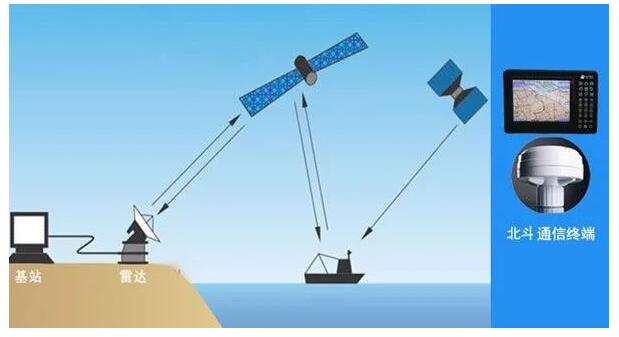
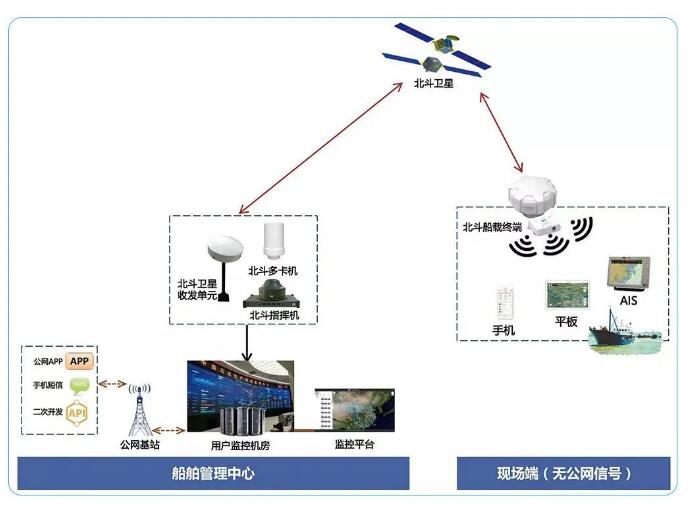
The Beidou short message satellite communication system is similar to the GPS positioning system. It is also composed of three parts: satellites in the sky, control stations on the ground and user computers.
The process of satellite communication is: User machine A sends the short message to the satellite, and then sends it to user machine B after being relayed by the satellite. The satellite communication mechanism is similar to the mobile phone communication mechanism. Mobile phone A can also send messages to mobile phone B through the base station. Therefore, once the base station is damaged, all mobile phones cannot be used normally.
It can be said that satellite systems are all similar, communication systems are all similar, and positioning systems are also similar. Of course, there will be many differences in details, such as frequency, encoding method, encryption method, transmission distance, transmission power consumption, link control, etc.
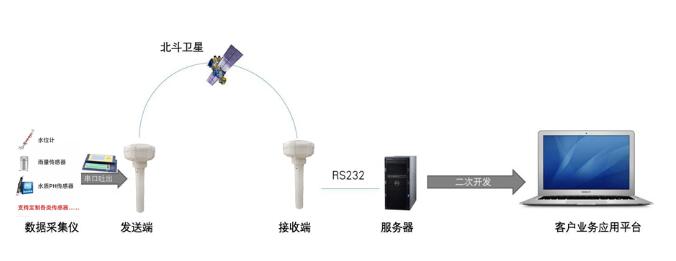
The sender of the short message first encrypts the communication application signal containing the receiver's ID number and communication content and then forwards it through the satellite to the station.; After the ground center station receives the communication application signal, it is decrypted and re-encrypted and then added to the continuously broadcast outbound broadcast message, which is broadcast to the user via satellite; The receiving user machine receives the outbound signal, decodes and decrypts the outbound message, and completes a communication. Similar to the positioning function, the transmission delay of short message communication is about 0.5 seconds, and the maximum frequency of communication is once per second.
3. Beidou short message classification
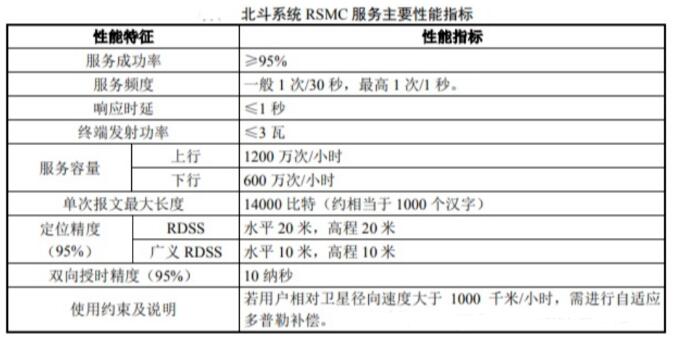
Beidou short messages are divided into regional short messages (RSMC) and global short messages (GSMC).
Regional Short Message (RSMC)
The Beidou system uses GEO satellites to provide regional short message communication services to users in China and surrounding areas.
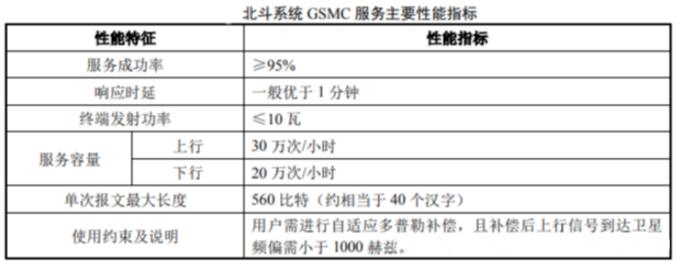
Global Short Message (GSMC)
The Beidou system uses MEO satellites to provide global short message communication services to licensed users located on the earth's surface and in space 1,000 kilometers above it.
4. Advantages of Beidou short message communication
Quick response capability, short message communication delay is about 0.5s, point-to-point communication delay is 1~5s. The communication has strong anti-interference and uses S/L band satellite transmission, which can penetrate the stratosphere and troposphere and ensure communication under extreme weather conditions. Low equipment requirements, low equipment prices, and high cost performance. Networking is convenient. With the command user machine as the core, a one-to-many communication network can be quickly formed.
5. What are the features and functions of Beidou short message mobile phone?
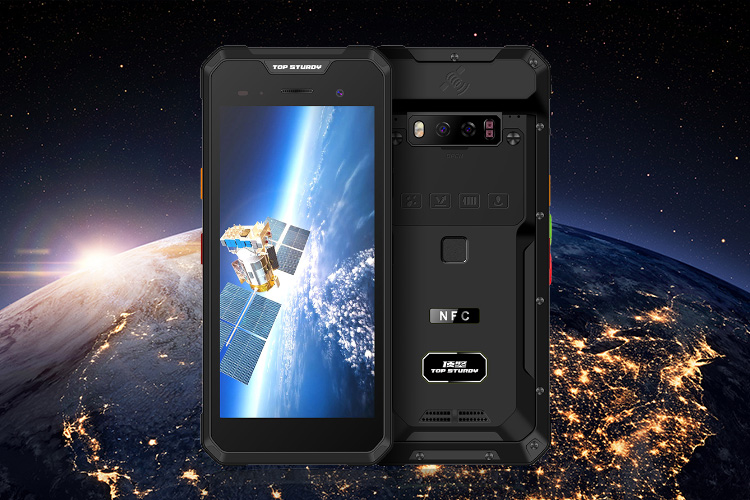
In our daily lives, we may not know much about Beidou short message equipment, but after the Beidou short message module is combined with Beidou mobile phones, it can not only realize positioning using Beidou mobile phones, but also realize two-way communication of Beidou short messages.
Positioning function
The device can provide the longitude, latitude and altitude of its location in real time, with a positioning accuracy of less than 20 meters, and displays it in a standard format (longitude, degrees/minutes/seconds), (latitude, degrees/minutes/seconds), (elevation, meters), (time, year, month, day, hour, minute, and second).
Communication function
When the handheld terminal sends a short message, the current location information can be sent to the platform or other terminals at the same time. The platform and terminals can parse or display the longitude and latitude of the sender. When communication information is received, sound, light or symbol prompts will be given according to the settings, and the communication time, sending address and communication message will be displayed in real time.
6. The role and application fields of Beidou short messages
Regarding the Beidou short message communication function, people may not feel its benefits in ordinary life, but in harsh environments without mobile communication signals, the Beidou short message communication function is particularly important. Beidou short message communication services cover China and surrounding countries and regions. It has the characteristics of low cost, wide coverage, high reliability and ready access. It can effectively supplement the terrestrial mobile communication network to meet the needs of my country's economy and society for emergency communications, search and rescue and other services in areas without terrestrial network coverage. As an important part of the national emergency system, short message communication services have played an active role in ensuring people's livelihood, disaster relief and reduction, and wild search and rescue in recent years.
In situations where ordinary mobile communication signals cannot be covered (the communication base station is destroyed after an earthquake disaster or in uninhabited areas in the wild, oceans and other areas without mobile signal coverage, short messages are used for communication, positioning information and remote sensing information, etc.), Beidou terminals equipped with Beidou short message modules can carry out emergency communications through short messages. During the 2008 Wenchuan earthquake, the rescue forces entering the hardest-hit area used the 120-character short message function to break through communication blind spots, get in touch with the outside world, and report the disaster situation for the headquarters to make timely decisions. Our country insists on developing its own Beidou navigation and positioning system. It can not only use Beidou short messages during disaster relief, but also monitor the location of disasters through satellite navigation and launch rescue operations in a timely manner.
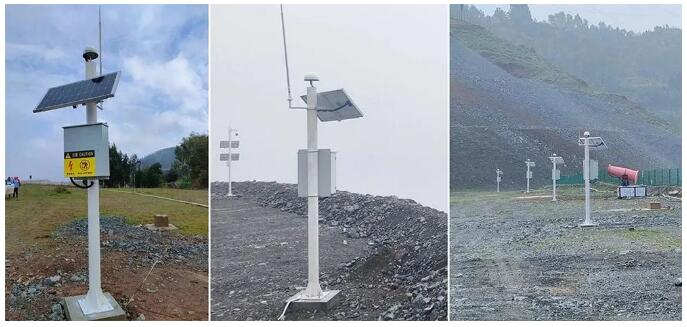
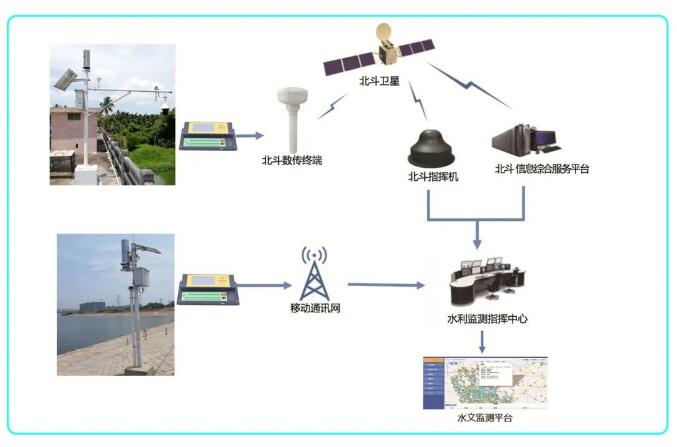
In addition, Beidou short messages can also be used in geological monitoring. After each monitoring point is laid out, change data is directly transmitted to the central system through short messages, and after calculation, sudden natural disasters can be responded to in a timely manner.
In addition, terminal equipment with Beidou short message modules can also be used in remote voice command and dispatch, maritime and air contacts, border patrols, individual soldier intercoms, anti-terrorism security, disaster relief, confidential communications, field operations, field exploration, etc., and can also be applied to wired and wireless confidential calls.