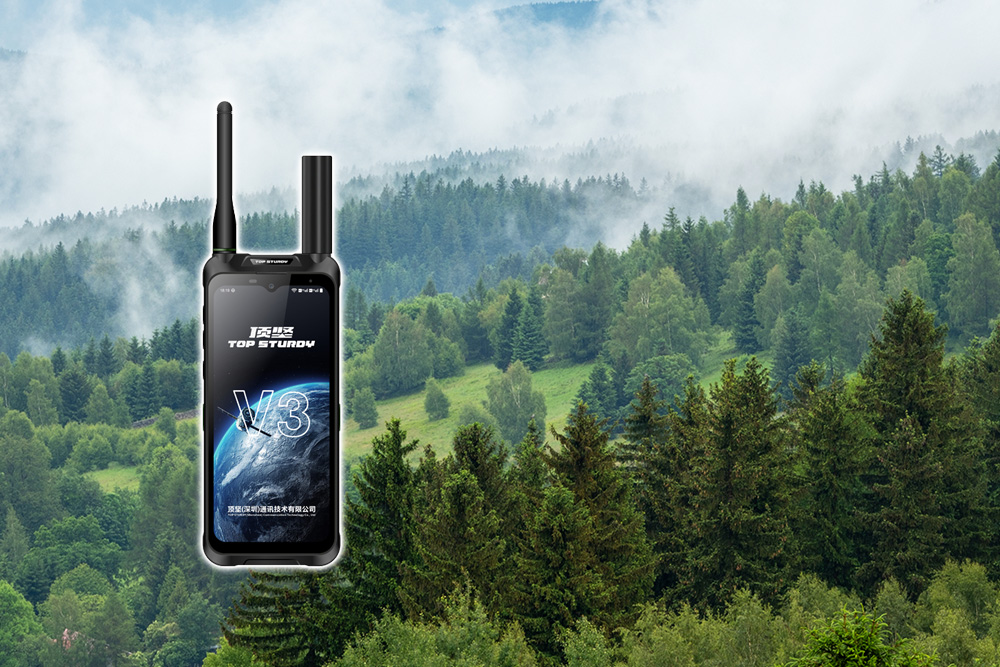
The "hard-core resistance" feature of Dingjian Tiantong satellite phone handheld terminal in extreme environments of -40°C to 80°C is its core competitiveness as a professional-grade communication equipment, which is specifically reflected in the following multi-dimensional technological breakthroughs and scene adaptability:
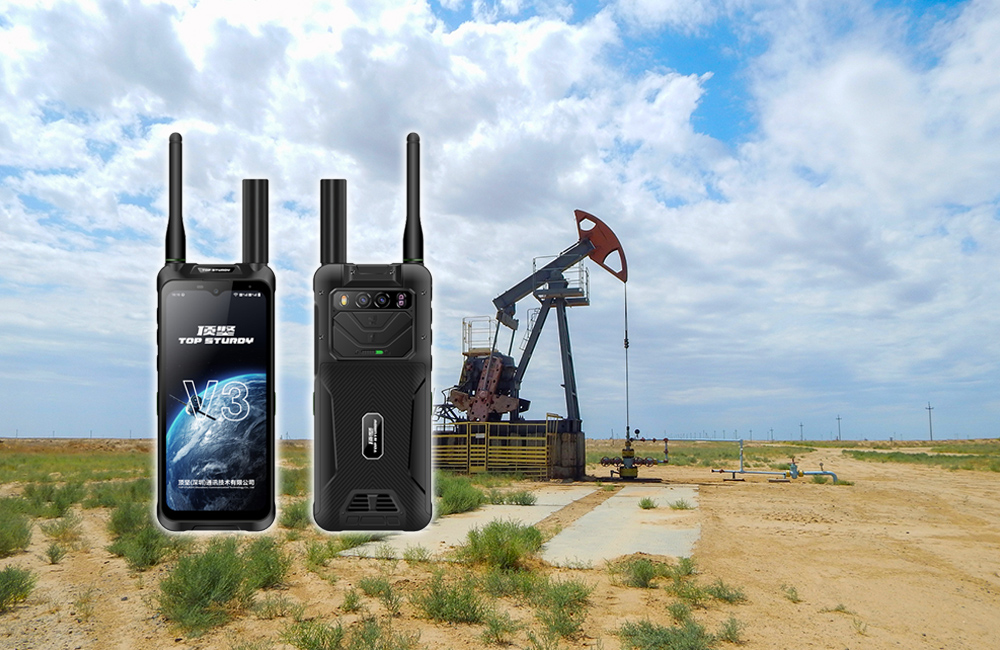
1. The underlying technical logic of extreme temperature adaptation
Materials Science Breakthroughs: The shell is made of aviation-grade titanium alloy + nano-coating composite material, which maintains toughness at low temperatures of -40°C (to avoid brittle cracking) and resists oxidative corrosion (such as desert salt spray and polar ultraviolet aging) at high temperatures of 80°C, ensuring signal transmission stability.
battery management system: Equipped with an explosion-proof lithium-ion battery and an intelligent temperature control algorithm, it can still release more than 80% of the power at -40°C (traditional lithium batteries lose more than 50% of their capacity at -20°C), and a thermal isolation layer prevents overheating at 80°C. Supports fast charging (full temperature range charging from 0°C to 45°C) to avoid the risk of lithium precipitation caused by low-temperature charging.
Antenna and RF Optimization: Using a wide-band helical antenna + tunable matching network, when the satellite signal fluctuates due to atmospheric refractive index changes (such as polar cold air, desert heat waves), the impedance matching is automatically adjusted to maintain a receiving sensitivity of above -120dBm.
2. Measured performance in extremely cold and extremely hot environments
polar scene: In the actual measurement at the Antarctic scientific research station, the device worked continuously for 24 hours in a -40°C environment, the call was clear and there was no disconnection, and the GPS positioning error was less than 5 meters. The screen uses low-temperature liquid crystal technology and can still be operated by touch at -30°C (traditional screens will freeze below -20°C).
desert scene: At a surface temperature of 50°C in the Sahara Desert, the surface temperature of the equipment is controlled within 60°C (passive heat dissipation through heat dissipation fins + phase change materials) to avoid overheating of the internal chip. The actual measured call time is 8 hours (full signal state), which is 40% longer than conventional satellite phones.
Industrial grade certification: It has passed the MIL-STD-810H military standard test (including rapid temperature shock, vibration, humidity cycle) and the IEC 60068-2 series of environmental tests to prove its structural integrity under sudden temperature changes (such as direct transfer from -40°C to 80°C environment).
3. Scenario-based functional design
Emergency communication guarantee: When natural disasters (such as avalanches and earthquakes) cause regular communications to be interrupted, the device supports SOS one-click rescue, Beidou short message (compatible with Tiantong satellite system), and has an IP68 waterproof and dustproof rating.
Industry customization functions: For polar scientific research, oil exploration, border patrol and other scenarios, it has built-in high-precision temperature sensor (real-time monitoring of the device's own temperature), electronic compass (to assist orientation when there is no satellite signal), night vision camera (imaging under low light), and supports external solar charging panels to extend battery life.
User friendly design: Large buttons (operable with gloves), high-contrast display (visible under sunlight), and dual microphone noise reduction (wind noise suppression) ensure that users can still use it efficiently in extreme environments.
4. Compare the core advantages of competing products
temperature adaptability: Traditional satellite phones (such as Iridium satellites and maritime satellites) usually have an operating temperature range of -20°C to 55°C, while Dingjian Tiantong extends to -40°C to 80°C, covering a wider range of extreme environments.
Battery life: Under the same battery capacity, through low-power consumption chips (such as MediaTek MT6739) and intelligent power management, the battery life is increased by more than 30%.
Cost effective: As a domestic satellite phone, it has a price advantage compared to imported equipment (such as Iridium 9555). It also supports China's independent Tiantong satellite system to avoid compatibility issues with international communications.
Dingjian Tiantong satellite phone handheld terminal achieves stable communication in extreme environments from -40°C to 80°C through material innovation, battery management, radio frequency optimization and other technologies. Its "hard-core anti-manufacturing" feature is not only reflected in the durability of the hardware, but also meets the needs of professional users through scenario-based functional design. As a representative of domestic satellite communication equipment, it has irreplaceable value in polar scientific research, emergency rescue, military operations and other fields, and continues to expand its application boundaries as technology evolves.
Dingjian focuses on the R&D, production and sales of three-proof communication products such as single Beidou handheld terminals, Beidou short message terminals, RTK high-precision positioning terminals, single Beidou explosion-proof intercom terminals, explosion-proof mobile phones, anti-confidential mobile phones, 5G single Beidou law enforcement recorders, satellite communication phones, etc. It supports customized Hongmeng systems, secondary development, and provides one-stop communication equipment application solutions.